How Predictive Finance Works (2026): The Science Behind Effortless Auto-Saving

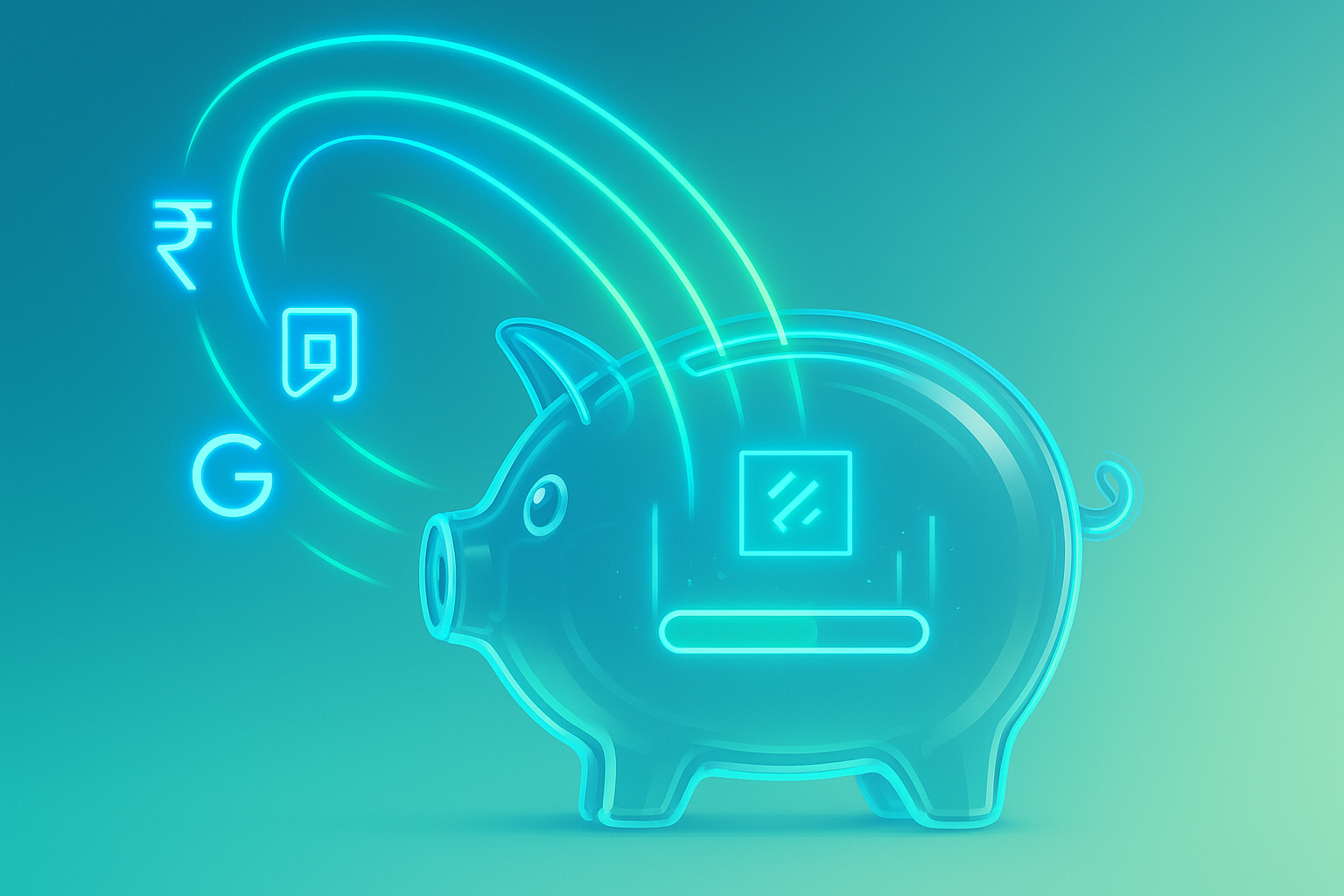
The Simple Truth Behind Why Auto-Saving Feels Like Magic
Most of us don’t save because we’re “bad with money.”
We don’t save because life keeps changing faster than our decisions.
Some months your rent feels easy…
Some months one emergency wipes your balance.
Some months you WANT to save—but your brain says, “Not now. Maybe next month.”
Predictive finance solves this by taking the pressure off your brain.
It studies your habits, your cash flow, your timing, your UPI patterns, your emotion around money… and then quietly saves money for you, in the background, without interrupting your life.
You don’t feel guilty.
You don’t feel confused.
You don’t need willpower.
It feels like having a calm friend who whispers:
“Don’t worry, I got this. I’ll save for you today. You focus on your life.”
What Exactly Is Predictive Finance? (Explained Simply)
Emotion
You want to save, but money feels unpredictable.
You’re scared to lock money because you may need it unexpectedly.
Insight
Predictive finance uses smart algorithms to understand:
- When you usually have more money
- When you typically spend more
- Your salary cycle
- UPI patterns
- Average monthly commitments
- Safe moments to save without affecting your lifestyle
It works like Google Maps for your money always recalculating the safest route.
Action
Think of predictive finance as “auto-pilot savings.”
You don’t set an amount.
You set a comfort level, and the system adjusts daily.
How Auto-Saving Actually Knows When To Save?
Emotion
Most people fear automatic saving:
“What if it takes money when I need it?”
Insight
Modern apps use three simple signals:
- Cash Flow Heat Maps
They detect your high and low balance days. - Behaviour Timing
They learn your spending rhythm (weekends, bills, recharge, UPI transfers). - Threshold Prediction
They never save below a “safe balance” your pattern already shows.
This is not guesswork it’s pattern recognition.
Action
Start with a low-risk auto-saving setting.
Let the system learn your real behaviour for 21–30 days.
Why Predictive Saving Works Better Than Human Decision-Making
Emotion
You want control, but emotions ruin financial timing.
Guilt, hesitation, fear, and impulse kill savings.
Insight
Predictive systems remove:
- Overthinking
- Emotional spending
- “I’ll save later” decisions
- Mental load
They save when your pattern shows the best moment—not when your mood decides.
Action
Let the system handle timing, and YOU handle goals.
The Daily-Life Science Behind Auto-Saving
Emotion
Money feels chaotic, but deep down, it’s predictable.
Insight
Auto-saving models track micro-behaviour:
- Your typical morning UPI spends
- Your preferred shopping days
- ATM withdrawals
- Subscription dates
- Moments when your balance is consistently highest
Even your “money personality” (spender/saver/anxious) can be detected from patterns.
Action
Review your weekly “auto-saved summary” and adjust comfort levels.
Does Predictive Finance Reduce Lifestyle Stress? YES.
Emotion
We all live with silent money fear:
“What if something happens next month?”
Insight
Auto-saving creates micro-cushions every week.
These cushions reduce stress because:
- You always have a buffer
- You stop living paycheck-to-paycheck
- You feel more confident with small emergencies
- You stop delaying savings
- Saving happens in invisible, tiny amounts
Psychologically, small wins create huge security.
Action
Set your predictive system to “micro-saving mode” for the first 30 days.
The Future of Money: Fully Automatic Financial Protection
Emotion
You want a future where money feels simple—not scary.
Insight
Predictive finance is evolving toward:
- Auto-emergency funds
- Smart bill prediction
- Intelligent investment triggers
- Salary-based budgeting without effort
- AI that protects you from overspending
- Auto-correction when your expenses rise
Think of it as financial stability on auto-mode.
Action
Start with savings.
The future will handle the rest.
Real-Life Examples (CrunchyFin-Style)
Example 1 : Riya, 23, First Job
Riya earns ₹22,000.
She never saved because she felt it was “too early.”
Predictive saving began saving ₹40–₹80 per day.
After 3 months ₹4,200 saved without noticing.
Example 2 : Amit, 30, Middle-Class Family
EMI, rent, groceries, kids.
Predictive finance saved only on high-balance days.
In 6 months, he built a ₹12,000 emergency buffer.
Example 3 : Someone Struggling With Discipline
No fixed habits.
Predictive finance saved ONLY after UPI traces showed unusually low weekly spending.
Result: zero stress + ₹2,000 per month saved.
Quick Action Plan
- Turn on auto-save (low setting first)
- Let it study your behaviour for 21–30 days
- Check weekly summaries
- Increase comfort level slowly
- Never use “fixed monthly saving” early
- Trust the system but track results
- Build your first ₹5,000 buffer
FAQs
1. Is predictive auto-saving safe?
Yes. It saves tiny amounts only when your pattern shows you can afford it.
2. Will it take money during emergencies?
No. Predictive systems avoid low-balance days and unpredictable phases.
3. Can I control how much it saves?
Yes. You set a comfort level, not a fixed amount.
4. What if my income is irregular?
Predictive saving works even better it adapts to your real cash flow.