How Blockchain Works: The Technology Behind Crypto

Ever wondered how Bitcoin, Ethereum, or even NFTs actually “work”? People say “it’s all on the blockchain” but what does that really mean? Don’t worry, we’ll keep this simple, like we’re explaining it to a friend over chai.
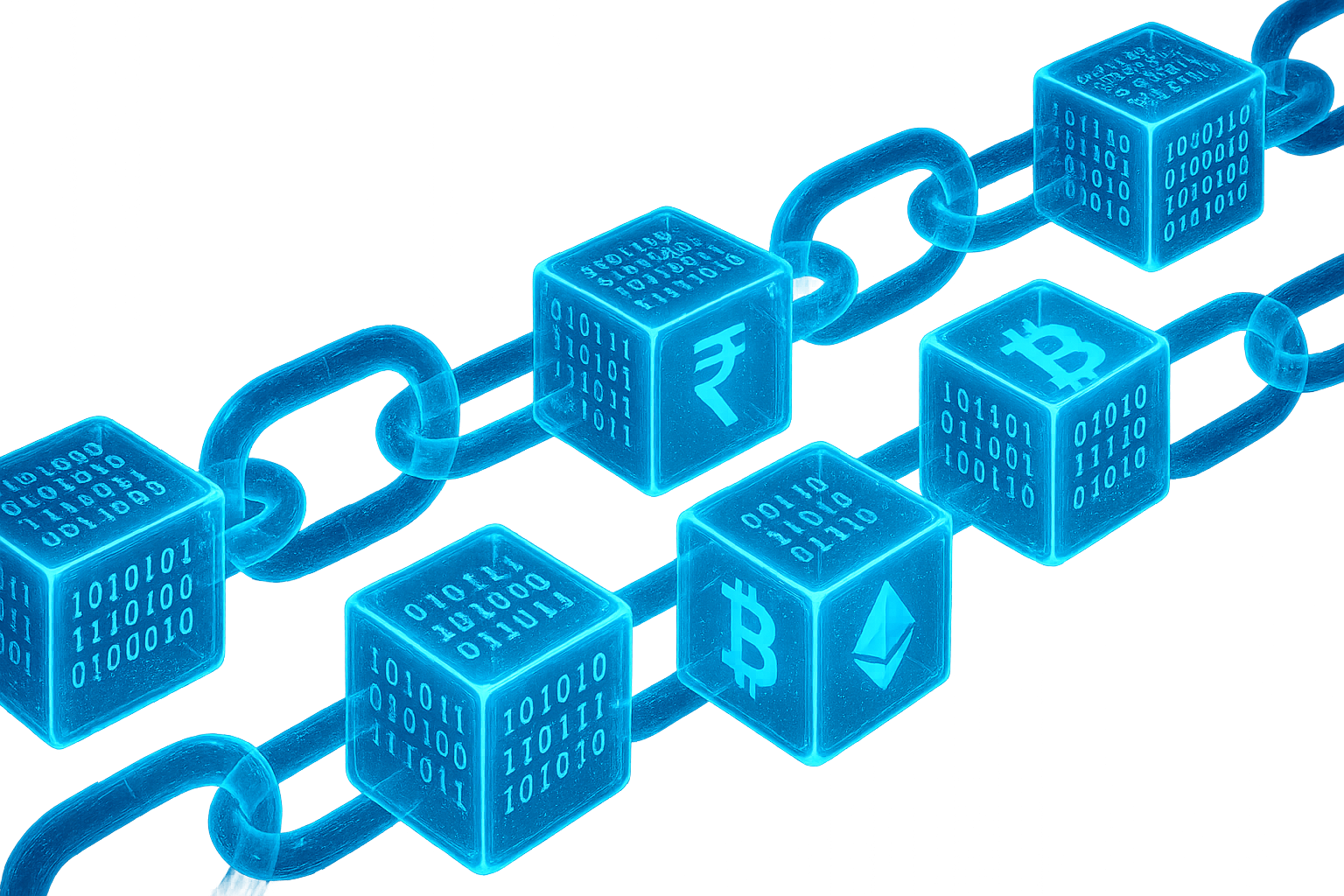
Blockchain isn’t magic. It’s basically a giant digital notebook that everyone can see, no one can secretly erase, and everyone agrees is correct. That’s why it’s the backbone of cryptocurrencies and many other technologies in 2025.
The Heart of Blockchain
Think of blockchain as a shared diary:
- Every page is a block, where transactions (like A sends 1 Bitcoin to B) are written.
- Each page is linked to the one before it, making a chain.
- Once you write something, you can’t erase it. You’d need to rewrite the entire diary on millions of copies that exist worldwide. Impossible!
That’s why blockchain is called secure, transparent, and immutable (unchangeable).
Key Ingredients That Make Blockchain Work
Blocks
A block is like a digital container of verified transactions. Each has a unique digital signature (hash) and a link to the previous block. That link makes the “chain” unbreakable.
Decentralized Ledger
Unlike your bank, where one central database controls everything, blockchain is spread across thousands of computers (nodes) worldwide. Everyone has the same copy. If someone tries to cheat, the rest of the network ignores it.
Cryptography
This is the “lock and key” of blockchain. Every block gets a unique fingerprint (hash), and transactions are signed with digital signatures. Even changing a comma in data would create a completely different hash exposing tampering instantly.
Consensus Mechanism
This is the “voting system” that makes sure everyone agrees before a new block is added. Two big methods:
- Proof of Work (PoW): Used by Bitcoin. Computers (“miners”) solve puzzles to validate transactions. It’s very secure but uses a lot of energy.
- Proof of Stake (PoS): Used by Ethereum. Validators are chosen based on how much crypto they “stake.” Faster, greener, and still secure.
How a Transaction Really Gets Added
Let’s imagine you send your friend ₹5,000 worth of Bitcoin:
- Request : You hit send on your crypto wallet.
- Broadcast : The transaction goes to the network of nodes.
- Verification : Nodes check: “Does Danish have enough Bitcoin? Is the signature real?”
- Block Creation : If valid, it’s added to a group of other transactions.
- Consensus : Through PoW or PoS, the network agrees the block is legit.
- Finalization : The block is added to the chain forever, visible to everyone.
It’s like sending money with UPI, but instead of one bank approving it, the whole world’s computer network approves it together.
Why It Matters in 2025
- It’s the reason crypto like Bitcoin, Ethereum, and stablecoins exist.
- It makes fraud super difficult, since no single bank or government controls it.
- Beyond money: it’s powering digital art (NFTs), supply chain tracking, online voting, and even land records in some countries.
At CrunchyFin, we say: Blockchain is trust built into technology. Instead of depending on middlemen, it lets people trust each other directly. That’s why it’s one of the most powerful ideas shaping the future of money and beyond.